Finding a reliable source for kratom can feel like navigating a maze blindfolded. With countless online shops claiming to offer premium products, how do you separate the legitimate suppliers from those cutting corners? The kratom market has exploded in recent years, yet regulation remains minimal, making vendor selection critical for both safety and satisfaction. Understanding how to evaluate Best Kratom Vendors is not just about getting quality products—it’s about protecting your health and investment in a marketplace where standards vary dramatically.
- Lab testing and transparency are non-negotiable indicators of vendor reliability and product safety
- Customer reviews and business longevity reveal patterns that help distinguish reputable vendors from unreliable sources
- Product variety, sourcing practices, and customer service collectively demonstrate a vendor’s commitment to quality
- Price comparison and return policies protect consumers while indicating fair business practices
- Documentation and compliance separate professional operations from questionable suppliers
Understanding the Kratom Vendor Landscape
The kratom industry operates in a unique space where consumer protection depends largely on vendor self-regulation. Unlike pharmaceuticals or even dietary supplements, kratom faces inconsistent oversight across different regions. This reality places the burden of quality assurance squarely on the shoulders of vendors—and by extension, informed consumers.
Reputable vendors distinguish themselves through voluntary adherence to Good Manufacturing Practices (GMP), third-party laboratory testing, and transparent business operations. These commitments cost money and require effort, which explains why premium vendors often charge slightly more than budget competitors.
The True Cost of Cheap Kratom
Bargain-basement pricing might seem attractive initially, but it often signals:
- ⚠️ Lack of laboratory testing
- ⚠️ Questionable sourcing practices
- ⚠️ Potential contamination risks
- ⚠️ Inconsistent alkaloid content
- ⚠️ Poor storage conditions
When evaluating any kratom seller, remember that quality control infrastructure requires investment. Vendors offering prices significantly below market averages may be compromising on essential safety measures.
Essential Quality Indicators for Vendor Evaluation
Laboratory Testing and Certification
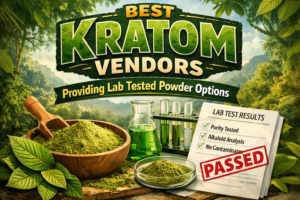
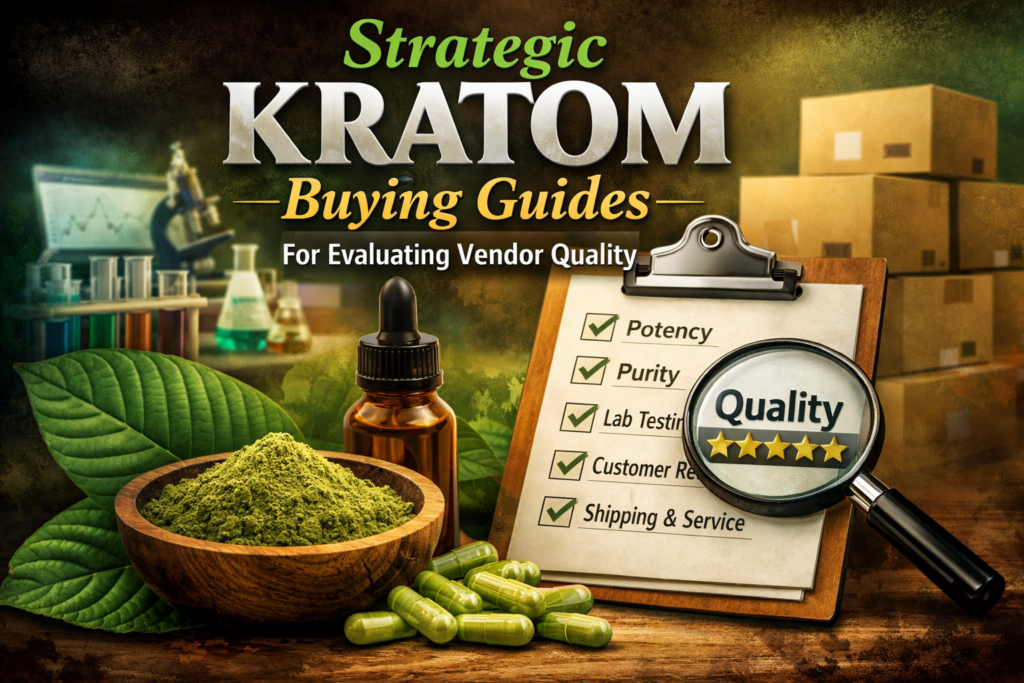
Third-party lab testing stands as the gold standard for kratom quality verification. Trustworthy vendors provide:
| Test Type | Purpose | What to Look For |
|---|---|---|
| Alkaloid Analysis | Confirms potency | Mitragynine and 7-hydroxymitragynine percentages |
| Heavy Metals Screening | Detects contamination | Results for lead, arsenic, mercury |
| Microbial Testing | Ensures safety | Absence of salmonella, E. coli, mold |
| Adulterant Screening | Verifies purity | No synthetic additives or fillers |
Premium vendors make these certificates readily available—either on product pages or upon request. Hesitation to provide lab results is a major red flag.
Sourcing Transparency and Supply Chain Integrity
Understanding where kratom originates matters tremendously. Top-tier vendors can articulate:
- Specific growing regions in Southeast Asia (Indonesia, Malaysia, Thailand)
- Relationships with farmers or harvesting cooperatives
- Import documentation and customs compliance
- Storage and handling procedures that preserve freshness
Vendors who speak vaguely about “premium sources” without specifics may lack genuine supply chain knowledge or oversight.
Customer Service and Communication Standards
Exceptional vendors view customer relationships as partnerships. Evaluate their commitment through:
✅ Responsive communication across multiple channels (email, phone, chat)
✅ Knowledgeable staff who understand strain differences and can offer guidance
✅ Clear policies regarding shipping, returns, and satisfaction guarantees
✅ Educational resources that demonstrate expertise beyond sales
“A vendor’s willingness to educate customers rather than simply push products reveals their true priorities and long-term thinking.”
Practical Evaluation Framework
Step 1: Research and Initial Screening
Begin by compiling a list of potential vendors through:
- Industry forums and community discussions
- Independent review websites (avoiding vendor-controlled testimonials)
- Social media presence and engagement quality
- Better Business Bureau ratings and complaint histories
Document your findings in a comparison spreadsheet to track multiple vendors simultaneously.
Step 2: Deep Dive Assessment
For vendors that pass initial screening, investigate:
- Website professionalism – Secure checkout, clear product descriptions, educational content
- Product range – Variety suggests established supplier relationships
- Batch consistency – Regular customers should report predictable experiences
- Packaging quality – Proper sealing, labeling, and freshness preservation
- Business longevity – Established vendors have track records to evaluate
Step 3: Test Purchase Strategy
Consider making a small initial order to evaluate:
- Shipping speed and packaging quality
- Product freshness and appearance
- Accuracy of order fulfillment
- Follow-up communication
- Actual product quality versus marketing claims
This low-risk approach provides firsthand experience before committing to larger purchases or ongoing relationships.
Red Flags That Signal Unreliable Vendors
Certain warning signs should immediately disqualify vendors from consideration:
🚩 Exaggerated health claims or medical promises
🚩 No contact information or physical business address
🚩 Refusal to provide lab testing documentation
🚩 Overwhelmingly negative reviews with consistent complaint patterns
🚩 Pressure tactics or limited-time offers designed to rush decisions
🚩 Payment methods that lack buyer protection
🚩 Vague product descriptions without strain or origin information
Trust your instincts—if something feels questionable, explore alternative options.
Building Long-Term Vendor Relationships
Once you identify reliable suppliers, nurturing these relationships offers benefits:
- Consistency in product quality and effects
- Priority customer service for established clients
- Loyalty programs or volume discounts
- Early access to new strains or limited batches
- Trusted advice as your preferences evolve
Many experienced kratom consumers maintain relationships with 2-3 trusted vendors, providing backup options while supporting businesses that prioritize quality.
Price Versus Value Analysis
Understanding pricing structures helps identify fair deals versus exploitation:
Reasonable pricing reflects:
- Quality sourcing and importation costs
- Laboratory testing expenses
- Professional packaging and storage
- Customer service infrastructure
- Business compliance and insurance
Suspiciously low prices often indicate:
- Skipped quality control steps
- Bulk purchasing of lower-grade material
- Inadequate testing protocols
- Minimal customer support
- Potential adulteration
Calculate cost per serving rather than package price to make accurate comparisons. A slightly more expensive vendor offering superior potency may actually provide better value.
Documentation and Compliance Standards
Professional vendors maintain comprehensive documentation:
- Import records proving legal sourcing
- Batch tracking systems enabling product recalls if necessary
- Insurance coverage protecting both business and customers
- Compliance with local regulations where applicable
- Membership in industry organizations like the American Kratom Association
These administrative elements might seem invisible to consumers, but they indicate serious business operations versus casual ventures.
Customer Review Interpretation
Not all reviews carry equal weight. Develop critical evaluation skills:
Trustworthy reviews typically:
- Provide specific details about products, shipping, and service
- Mention both strengths and minor weaknesses
- Come from verified purchasers
- Appear across multiple platforms
- Show reasonable distribution over time
Suspicious reviews often:
- Use generic language applicable to any vendor
- Appear in clusters suggesting coordination
- Lack specific product or experience details
- Exclusively offer extreme ratings (all 5-star or all 1-star)
Look for patterns across multiple review sources rather than relying on any single platform.
Vendor Responsiveness to Issues
How vendors handle problems reveals their true character:
- Proactive communication about shipping delays or stock issues
- Fair resolution of legitimate complaints
- Accountability when mistakes occur
- Continuous improvement based on customer feedback
- Transparent policies that protect consumer interests
Test responsiveness by asking pre-purchase questions and observing response quality and timing.
Conclusion
Identifying the best kratom vendors requires diligent research, critical thinking, and strategic evaluation across multiple quality dimensions. The most reliable suppliers distinguish themselves through transparent laboratory testing, traceable sourcing practices, responsive customer service, and consistent product quality. While this evaluation process demands time and attention upfront, it protects both health and financial investment in a marketplace where standards vary dramatically.
Start by applying the frameworks outlined here—screen potential vendors systematically, verify their testing protocols, examine their business practices, and make small test purchases before committing to larger orders. Build relationships with 2-3 vendors who consistently demonstrate quality and reliability, creating a stable supply chain for your needs.